Jul 08 2025
Do you live in a city where the weather seems to have it out for your property? Of course, some cities are just more prone to prop
Learn more
.webp)
From burst pipes to severe weather, water damage is a serious threat that can cause extensive property damage and long-term health risks such as mold growth.
Do you live in a city where the weather seems to have it out for your property? Of course, some cities are just more prone to prop
Learn more
According to the National Fire Protection Association, in 2013, a home fire was reported every 85 seconds, and a civilian fire injury was reported every 33 minutes.
Learn more
Natural and man-made floods are the top two most common disasters experienced across the U.S. In the past five years, every state
Learn more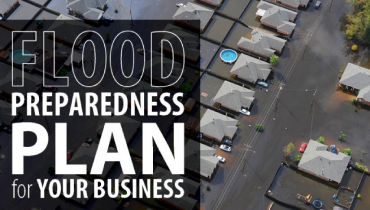
You’ve probably heard this king of corny jokes: “Is your refrigerator running? You’d better go catch it!” However, what about your
Learn more
Just like solving a crime, the first 48 hours after flooding occurs in your home are critical. Seeping water damage is progressive, pervasive and can mean valuable objects may become permanently damaged – especially if emergency response is delayed beyond the first 48 hours.
Learn more.webp)
The destructive power of tsunamis is enormous. The 2004 tsunami in the in the Indian Ocean was among the deadliest natural disaste
Learn more

Let us know how we can help you today.
Ready to dive into our comprehensive data set to see how your city stacks up against the rest? We created this sortable data table to help you make informed investment and adaptation decisions for the future.
\nUnderstanding U.S. cities' risks is crucial in making informed decisions and preparing for the future. As the impact of climate change is felt nationwide, it's essential to stay informed, prioritize safety measures, and support policies that protect our communities.
\nWhen natural disasters, like floods and fires, strike, they can leave property owners frustrated and with a sense of urgency to get back up and running as soon as possible. At Rainbow Restoration, we’re here to ease some of that burden with a full suite of residential and commercial restoration services to help you get your business and property back on track so you can breathe easily.
\nTo find the most at-risk cities for property damage, we started with a list of the 100 most populated cities in the U.S. and ranked them from 1 to 100 based on flood, fire, heat, and wind risk factors from RiskFactor.com.
\nWe then assigned weights to each factor depending on how much they could affect property owners. Based on the weights, each city we analyzed was given a score out of 100. Using projections from RiskFactor.com, we were also able to find the cities that could see the most significant increases in property damage from flood and fire over the next 30 years.
\r\n"}, { "custom_dt_modified":"2025-07-08T06:18:22Z", "custom_s_local_url":"/blog/how-to-prepare-a-fire-emergency-kit", "custom_s_opus_version":"2", "custom_s_heading":"How to Prepare a Fire Emergency Kit", "custom_s_local_dba":"none", "custom_dt_created":"2025-07-08T00:00:00Z", "custom_s_category":"catastrophe-response", "custom_ss_category":["catastrophe-response"], "custom_s_article_summary_Image_url":"/us/en-us/rainbow-restoration/_assets/images/rbw-blog-fireemergencykitbanner-370.webp", "custom_t_content_summary_Desc":"According to the National Fire Protection Association, in 2013, a home fire was reported every 85 seconds, and a civilian fire injury was reported every 33 minutes.", "custom_t_content_summary_Image_url_alt":"Emergency fire kit blog banner image.", "custom_t_heading":"How to Prepare a Fire Emergency Kit", "custom_t_content":"
\nPreparing a fire emergency kit is crucial for safety during unexpected disasters. Rainbow Restoration recommends:\n
| \n
According to the U.S. Fire Administration, the leading cause of house fires is cooking (47.7%). Statistics like these illustrate the importance of having a fire emergency kit prepared and ready for use.
\nHaving an emergency kit will help your family prepare for all types of disasters, and it can especially help when an evacuation is in order or someone gets injured. There are a number of supplies that should be kept on hand and stored in an easy-to-carry container. The kit should be placed in the same easily accessible spot in your home all the time so all members of the family know where it is located.
\nIn the case of quick evacuation, you should have a kit loaded with enough food, water, and supplies for your family. Although local officials will be on the scene shortly after, there may not be immediate attention given to everyone involved in the situation. Your kit will also come in handy in the event that basic utilities are out of use for any period of time.
\nA fire emergency requires everyone to escape very quickly, so the kit cannot be too heavy or full to find quickly and carry easily. For a full list of supplies your fire emergency kit should contain, visit www.ready.gov.
\nIt’s important to make sure any food you have stored has not gone bad, and to replace it if it has. Anything that would be rendered useless in the event of an emergency should be removed and replaced as soon as possible.
\nMaking sure your kit is updated a ready to go in the case of an emergency is necessary. You should also take your family’s current needs into consideration if they have changed in the last year.
\nAnother essential part of fire emergency preparedness is having a plan. Besides knowing where the emergency kit is, all members of the family should also know the evacuation plan.
\nGrab your family and walk through your home to locate all possible exits and escape routes. Everyone should know where these are to be able to find the best route out of the house during an emergency. Families with children should consider creating a map of the house that marks two ways out of each room.
\nDetermine a location outside of the home where everyone can meet up after exiting the home. Make sure to mark this place on the escape plan.
\nIf a fire disaster strikes, you can rely on the rapid, professional restoration services from the experts at Rainbow Restoration®. For more than 30 years, the experts at Rainbow Restoration have provided commercial and residential fire restoration services that revive hope, safety, and confidence. Rainbow Restoration restores, so you can recover and get back to your life.
\nOther Related Blog Posts:
\nFireplaces: 7 Burn Practices to Increase Efficiency
\nSpark of Disaster: How To Prevent Electrical Fires
\nPut Out a Grease Fire with These Kitchen Ingredients
\r\n"}, { "custom_dt_modified":"2025-07-08T06:15:49Z", "custom_s_local_url":"/blog/flood-preparedness-plan-for-your-business", "custom_s_opus_version":"2", "custom_s_heading":"Flood Preparedness Plan for Your Business", "custom_s_local_dba":"none", "custom_dt_created":"2025-07-08T00:00:00Z", "custom_s_category":"catastrophe-response", "custom_ss_category":["catastrophe-response"], "custom_s_article_summary_Image_url":"/us/en-us/rainbow-restoration/_assets/images/rbw-flood-evacuation-plan.webp", "custom_t_content_summary_Desc":"Natural and man-made floods are the top two most common disasters experienced across the U.S. In the past five years, every state ", "custom_t_content_summary_Image_url_alt":"Flood Evacuation Plan", "custom_t_heading":"Flood Preparedness Plan for Your Business", "custom_t_content":"
\nRainbow Restoration emphasizes the importance of a comprehensive flood preparedness plan for businesses to minimize damage and ensure continuity. Key steps include:\n
| \n
Natural and man-made floods are the top two most common disasters experienced across the U.S. In the past five years, every state has experienced natural flood-related disasters such as coastal, river or flash flooding, and 20% of all insurance claims are accountable to floods of man-made origin (plumbing and appliance leaks, sewage backups). Despite the prevalence of floods, most businesses remain unprepared. Statistics show, of businesses closing in response to a disaster, a staggering one-in-four never re-open. Flood plans, like your fire evacuation preparedness plan, are key not only to mitigating the very real property and health risks of common flood-related disaster, but key to your future success.
\nA flood emergency preparedness plan will be quite different for a construction zone than an office building or industrial facility. Each site and industry suffers unique risks. Industry-specific resources are essential to planning success, as is staff training. A well-informed staff can prevent confusion and added risks to employees and property in the event of disaster.
\nPost-flood cleanup is hazardous. Cleanup crews are at enhanced risk of injury and illness due to exposure to debris hazards and contaminated water. With water, mold and bacteria proliferation increase with each hour left unaddressed. Quick remediation, proper safety gear and on-site sanitary and medical provisions are essential to treating clean-up related injury.
\nDo you have a trusted water damage and mold remediation professional as part of your flood plan? The experts at Rainbow Restoration® can help you get back up and running fast. Contact us today.
\r\n"}, { "custom_dt_modified":"2025-07-08T06:14:29Z", "custom_s_local_url":"/blog/the-most-likely-fixes-for-a-running-toilet", "custom_s_opus_version":"2", "custom_s_heading":"The Most Likely Fixes for a Running Toilet", "custom_s_local_dba":"none", "custom_dt_created":"2025-07-08T00:00:00Z", "custom_s_category":"catastrophe-response", "custom_ss_category":["catastrophe-response"], "custom_s_article_summary_Image_url":"/us/en-us/rainbow-restoration/_assets/images/rbw-running-toilet-fixes.webp", "custom_t_content_summary_Desc":"You’ve probably heard this king of corny jokes: “Is your refrigerator running? You’d better go catch it!” However, what about your", "custom_t_content_summary_Image_url_alt":"Running Toilet Fixes", "custom_t_heading":"The Most Likely Fixes for a Running Toilet", "custom_t_content":"
\nA running toilet can waste water and increase utility bills. Rainbow Restoration highlights some common fixes.\n
| \n
You’ve probably heard this king of corny jokes: “Is your refrigerator running? You’d better go catch it!” However, what about your toilet running? This is no joke! Luckily, there are some relatively simple fixes you can do yourself. Check out these DIY instructions for addressing some of the more common causes of a running toilet.
\nYour toilet’s flapper, or its flush valve seal, is the rubber piece that plugs the drain hole on the bottom of your toilet tank and holds back tank water for the next time you flush. Defective flappers are a very common cause of a running toilet. Over time, flappers deteriorate, allowing for water to pass through. They can also break, warp or get dirty
\nIf you decide you need to replace your flapper, this is an easy running toilet fix! Flappers are inexpensive and will pop right on the flapper chain. When purchasing a new flapper, be sure it attaches to the chain at the center of the flapper and not the outer edge. This way, you’ll prevent unwanted warping.
\nThe chain connected to your flapper is crucial in preventing your toilet from running incessantly. A tangled chain won’t allow your toilet’s flapper to close and water will continue to run into the bowl. A chain that’s too long or too short won’t work either. If the chain is too long, it will interfere with the flapper closing, causing it to constantly run. In addition, your flush will not be very strong
\nIdeally, your chain should have about an inch of slack – more than an inch and your chain will tangle. To achieve this, you may cut the chain, move the clip down to reduce its length, or purchase a new chain altogether. Some chains come with floaters, and if yours does, ensure it’s not pulling up on the flapper by moving the float up the chain so it sits comfortably on the tank water surface.
\nThe float is the plastic balloon that tells your toilet when the tank is full. Your toilet has one of two types of floats: a ball float or a cup float. If your float is set too high, water levels will rise above the overflow pipe and the tank won’t stop running.
\nIf you have a ball float, simply bend the arm down so it sits lower. For cup floats, slide the float down the central tube.
\nIf you experience a flood, be sure to contact the professionals at Rainbow Restoration for immediate water remediation.
\r\n"}, { "custom_dt_modified":"2025-07-08T06:12:43Z", "custom_s_local_url":"/blog/flooding-response-when-every-second-counts", "custom_s_opus_version":"2", "custom_s_heading":"Flooding Response: When Every Second Counts", "custom_s_local_dba":"none", "custom_dt_created":"2025-07-08T00:00:00Z", "custom_s_category":"catastrophe-response", "custom_ss_category":["catastrophe-response"], "custom_s_article_summary_Image_url":"/us/en-us/rainbow-restoration/_assets/images/rbw-blog-flooding-when-every-second-counts-blog-hero-image-(1).webp", "custom_t_content_summary_Desc":"Just like solving a crime, the first 48 hours after flooding occurs in your home are critical. Seeping water damage is progressive, pervasive and can mean valuable objects may become permanently damaged – especially if emergency response is delayed beyond the first 48 hours.", "custom_t_content_summary_Image_url_alt":"Flooding Response: When Every Second Counts Hero Image.", "custom_t_heading":"Flooding Response: When Every Second Counts", "custom_t_content":"
\nRainbow Restoration emphasizes the importance of swift action during flooding emergencies. Key steps include:\n
| \n
Just like solving a crime, the first 48 hours after flooding occurs in your home are critical. Seeping water damage is progressive, pervasive and can mean valuable objects may become permanently damaged – especially if emergency response is delayed beyond the first 48 hours. You have a very short window to avoid permanent damage like mold, dry wall rot and complete loss of personal property.
\nHere is a breakdown of the process that occurs in your home once it has been saturated with water and the steps you can take to save your home.
\nTo prevent the lasting effects of mold you will need to contact a professional and have the property fully dry within the first 48 hours. Not taking these measures can lead to threatening mold, drywall deterioration, appliance loss, carpet/floor damage as well as numerous other health and safety concerns.
\nThe shock and aftermath of destruction storms, like Hurricane Harvey, can be overwhelming. As soon as the water penetrates your home, it's important to call in professionals, like Rainbow Restoration, to mitigate your home. With quick, efficient emergency professional services that are on call 24-hours a day, they can provide caring service and quality work to forgo permanent water damage to your home or business.
\nTo help meet all of your home service needs, check out Neighborly. Once on the site, click on \"Join the Community\" to find providers to service all your home needs.
\nIf you've been impacted by Hurricane Harvey, Rainbow Restoration is here to help. Our certified service professionals will provide expertise combined with caring and compassion. Rainbow's skill in water restoration and rapid structural drying and cleaning will help set your mind at ease. Our service professionals are fully certified by the Institute of Inspection, Cleaning and Restoration Certification.
\nRainbow Restoration provides 24/7 rapid response to ensure your home or business gets back on track, so you can move on. Even as Harvey weakens into a tropical storm, it will still bring flooding and related damage to a significant portion of Texas and emergency disaster recovery will be a priority. Call or schedule an appointment online for professional water damage restoration services.
\r\n"}, { "custom_dt_modified":"2025-07-08T06:11:50Z", "custom_s_local_url":"/blog/tsunamis-what-are-they-and-what-do-you-do", "custom_s_opus_version":"2", "custom_s_heading":"Tsunamis: What Are They and What Do You Do?", "custom_s_local_dba":"none", "custom_dt_created":"2025-07-08T00:00:00Z", "custom_s_category":"catastrophe-response", "custom_ss_category":["catastrophe-response"], "custom_s_article_summary_Image_url":"/us/en-us/_assets/images/rbw-blog-graphic-tsunami.webp", "custom_t_content_summary_Desc":"The destructive power of tsunamis is enormous. The 2004 tsunami in the in the Indian Ocean was among the deadliest natural disaste", "custom_t_content_summary_Image_url_alt":"Tsunamis", "custom_t_heading":"Tsunamis: What Are They and What Do You Do?", "custom_t_content":"\nTsunamis are powerful natural disasters that require swift action to ensure safety. Rainbow Restoration outlines some key steps to prepare for and respond to tsunamis.\n
| \n
The destructive power of tsunamis is enormous. The 2004 tsunami in the Indian Ocean was among the deadliest natural disasters on record, killing over 230,000 people in 14 countries. Are you at risk of, and prepared for a tsunami?
\nTsunamis don’t resemble normal, breaking sea waves, but a rising tide or large wall of water. Tsunamis are generally part of a series of waves, arriving in a “wave train,” ranging from 10 minutes to 2 hours to even days apart. Sixty to 300 miles wide, the waves can travel at speeds of 500-600 mph and reach heights of 32 feet or more. A sobering concept when you consider a mere two inches of water can knock you over and two feet of water can carry away most cars.
\nWhat can cause a tsunami?
\nHistorically, major tsunamis happen once per decade, however, the incidence of tsunamis varies widely by the coastline.
\nThough tsunamis cannot be predicted, forecasting possible tsunami hazards is possible with the help of seismic and sea level data, as well as computer modeling following seismic activity. Natural warning signs of a tsunami include:
\nHow can I prepare for a tsunami emergency?
\nWhat to do in the event of a tsunami:
\nDon’t let your home suffer from waves of destruction. Get the help you need with Rainbow Restoration® today.
\n